


Achieving Optimal Human-AI SEO Balance: Strategies for Digital Success

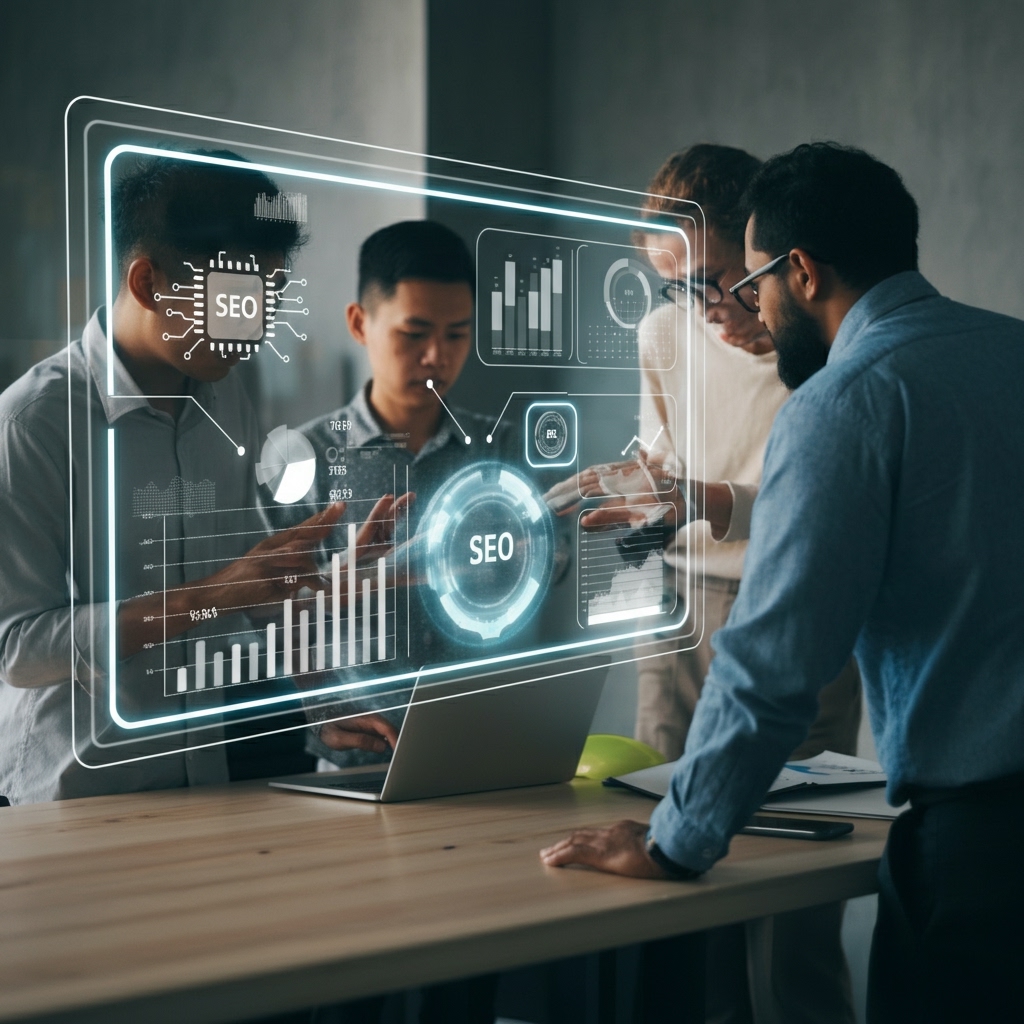
In today’s fast-evolving digital landscape, achieving the optimal human AI SEO balance is paramount for sustained online visibility and success. This balance lies in strategically using AI to augment, not replace, human intelligence, ensuring data-driven decisions are infused with creativity, strategic foresight, and ethical considerations. We recognize the growing challenge of integrating artificial intelligence into search engine optimization workflows effectively. This article will provide a clear framework for navigating this integration, exploring the unique strengths of both human ingenuity and AI capabilities. You’ll learn how to leverage powerful AI-powered SEO tools and implement practical strategies for seamless human-AI collaboration to elevate your digital marketing efforts and achieve superior search rankings.
The Indispensable Role of Human Expertise in AI-Powered SEO
[IMAGE_PLACEHOLDER_0]While artificial intelligence offers unprecedented capabilities for data processing and automation, the core of effective SEO remains deeply rooted in human understanding, creativity, and strategic insight. Human expertise is not just complementary; it’s the critical differentiator that transforms raw data into meaningful strategies, ensuring that SEO efforts align with brand values and genuine user needs.
AI can analyze patterns and predict trends, but it lacks the nuanced understanding of human emotion, cultural context, and the ever-shifting landscape of user intent. This is where the human element becomes irreplaceable, guiding AI’s powerful capabilities towards truly impactful outcomes and preventing a purely algorithmic, soulless approach to content and optimization.
Understanding Search Intent and User Experience
AI excels at identifying keywords and analyzing search volume, but interpreting the ‘why’ behind a search query requires human intuition. A human SEO specialist can delve into the psychology of a user, understanding their implicit needs and pain points that AI might miss. This deep understanding allows for the creation of content that truly resonates and provides value, enhancing the overall user experience.
Furthermore, evaluating website usability and designing intuitive user journeys are inherently human tasks. While AI can highlight technical issues, only a human can empathize with a user’s interaction flow, ensuring that the website not only ranks well but also converts visitors into loyal customers. This focus on the holistic user journey is crucial for long-term SEO success.
Strategic Planning and Ethical Oversight
Developing a comprehensive SEO strategy involves much more than keyword placement and backlink acquisition; it requires setting ambitious yet realistic goals, understanding market dynamics, and anticipating future trends. These high-level strategic decisions are firmly in the human domain. Humans define the overarching vision, brand messaging, and competitive positioning that AI tools then help to execute.
Crucially, human oversight is essential for ensuring ethical AI in SEO practices. This includes preventing algorithmic bias, ensuring data privacy, and maintaining transparency in AI’s role. Without human ethical guidelines, AI’s pursuit of efficiency could inadvertently lead to practices that harm user trust or violate industry standards. Human responsibility guarantees that AI is used for good, not just for gain.
Content Quality and Brand Voice
While AI can generate impressive content drafts, the refinement of language, the injection of unique brand voice, and the cultivation of compelling narratives remain human strongholds. Humans add the ‘soul’ to content, ensuring it is not only optimized for search engines but also engaging, authoritative, and reflective of the brand’s personality.
The ability to tell a story, evoke emotion, and build a connection with an audience is a distinctly human skill. For impactful content optimization strategies, human editors and writers are vital in polishing AI-generated text, fact-checking for accuracy, and infusing it with the necessary expertise, experience, authoritativeness, and trustworthiness (E-E-A-T) signals that search engines increasingly value.
Leveraging AI for Enhanced SEO Efficiency and Scale
[IMAGE_PLACEHOLDER_1]While humans provide the strategic direction and qualitative judgment, AI brings unparalleled capabilities for efficiency, scale, and data-driven insights to SEO. When integrated thoughtfully, AI transforms mundane, time-consuming tasks into automated processes, freeing up human experts to focus on higher-level strategy and creative problem-solving. This synergy allows businesses to achieve more with fewer resources, driving significant gains in visibility and performance.
The power of artificial intelligence lies in its ability to process and interpret vast amounts of data at speeds impossible for humans. This capability makes AI an indispensable partner in many aspects of modern SEO, from initial research to ongoing performance monitoring and adjustment.
Data Analysis and Predictive Insights
AI excels at sifting through massive datasets, identifying trends, patterns, and anomalies that would be invisible to the human eye. This includes comprehensive keyword research, competitor analysis, and backlink profile auditing. AI-powered SEO tools can quickly identify lucrative keyword opportunities, predict search trends, and uncover gaps in competitor strategies, providing actionable insights almost instantly.
Furthermore, AI’s predictive modeling capabilities can forecast the potential impact of SEO changes, helping marketers make more informed decisions about content creation, technical adjustments, and link-building efforts. This data-driven foresight significantly reduces guesswork and improves the chances of successful campaign outcomes.
Automation of Repetitive Tasks
Many SEO tasks are repetitive and labor-intensive, such as technical audits, report generation, and basic content drafting. AI can automate these processes with remarkable precision and speed, drastically improving efficiency. For example, AI can continuously monitor website health, flagging broken links, crawl errors, and slow page speeds in real-time, allowing human teams to address critical issues proactively.
SEO automation also extends to content generation, where AI can produce outlines, write initial drafts, or repurpose existing content for different platforms. This doesn’t replace human writers but significantly accelerates the content creation workflow, enabling a higher volume of optimized content to be published consistently. This revolutionary shift in digital marketing allows teams to scale their efforts without proportionally increasing human resources.
Personalization and Hyper-Targeting
In an increasingly competitive online environment, personalization is key to engaging users and driving conversions. AI can analyze individual user behavior, preferences, and historical data to deliver highly personalized content and search experiences. This includes dynamically adjusting website content, recommending relevant products or services, and tailoring ad campaigns to specific audience segments.
By leveraging AI for hyper-targeting, businesses can ensure their SEO efforts reach the most relevant audiences with messages that resonate deeply. This precision not only improves engagement rates but also maximizes the return on investment for SEO campaigns, making every interaction more meaningful and effective.
Striking the Balance: A Framework for Human-AI Collaboration
[IMAGE_PLACEHOLDER_2]The true power of AI in SEO isn’t in its ability to replace humans, but rather in its capacity to enhance human capabilities and unlock new levels of efficiency and insight. Striking the right human AI SEO balance requires a well-defined framework that emphasizes collaboration, clear roles, and continuous learning. This balanced approach ensures that the strengths of both human intelligence and artificial intelligence are maximized, leading to more robust and adaptable SEO strategies.
Developing a symbiotic relationship between human experts and AI tools is key to navigating the complexities of modern search engines. This framework encourages a partnership where each entity contributes its unique strengths, creating an SEO ecosystem that is both powerful and ethical.
Define Clear Roles and Responsibilities
For effective collaboration, it’s crucial to establish clear boundaries and responsibilities. Human SEO professionals should focus on strategic planning, creative direction, understanding complex user intent, and making final qualitative judgments. AI, on the other hand, should handle data collection, analysis, repetitive task automation, and generating insights from vast datasets. This division of labor ensures that each party operates within its core competencies, optimizing workflow and preventing redundancy.
For instance, a human might decide the strategic direction for a new content cluster, while AI generates topic ideas, performs keyword research, and drafts initial content outlines. The human then refines the content, ensuring brand voice, accuracy, and overall quality. This clear delegation fosters efficient operations and maximizes the output of both human and AI resources, ensuring proper human oversight in AI processes.
Iterative Feedback Loops and Continuous Learning
The relationship between human and AI in SEO should be iterative and dynamic. Humans must provide consistent feedback to AI tools, helping them to learn and improve their performance over time. This feedback loop is essential for refining AI’s outputs, ensuring they align more closely with strategic goals and quality standards.
Conversely, AI’s analytical insights can inform and refine human strategies. By continuously monitoring AI-generated reports and performance data, human SEO specialists can adapt their approaches, identify new opportunities, and make data-backed adjustments. This continuous learning process ensures that the SEO strategy remains agile and responsive to market changes and algorithm updates, a true digital marketing revolution.
Prioritizing Semantic SEO and E-E-A-T
Modern SEO is increasingly moving beyond simple keyword matching towards understanding the semantic context of content and the authority of its creators. AI tools can greatly assist in analyzing semantic relationships, identifying related topics, and ensuring comprehensive coverage of a subject. However, demonstrating Experience, Expertise, Authoritativeness, and Trustworthiness (E-E-A-T) is fundamentally a human endeavor.
Human experts are responsible for building genuine authority through high-quality content, expert contributions, and transparent practices. AI can help identify gaps in semantic SEO coverage or flag areas where E-E-A-T signals are weak, but it’s human creativity and strategic input that ultimately build and communicate these crucial trust factors to search engines and users alike.
Future-Proofing Your SEO Strategy with Human-AI Synergy
[IMAGE_PLACEER_3]As search engines continue to evolve, with AI playing an increasingly significant role in understanding and ranking content, the synergy between human intelligence and artificial intelligence will become the cornerstone of future-proof SEO strategies. The ability to adapt, innovate, and continuously improve will depend on how effectively we integrate these two powerful forces. Embracing this collaborative future is not an option but a necessity for sustained digital growth.
The landscape of search is dynamic, with algorithm updates and new technologies constantly reshaping how users find information. A strategy built on the robust foundation of human-AI collaboration is inherently more resilient and capable of navigating these shifts, ensuring long-term relevance and competitive advantage.
Embracing a Hybrid Approach
The future of SEO isn’t about choosing between human or AI; it’s about embracing a hybrid model where both work in concert. This means integrating AI tools into every stage of the SEO workflow, from keyword research and content creation to technical audits and performance analysis, while always maintaining human oversight and strategic direction. The goal is to create a seamless ecosystem where AI handles the heavy lifting and data processing, allowing human experts to focus on critical thinking, creativity, and relationship building.
This hybrid approach allows for unparalleled efficiency and scale, enabling SEO teams to manage larger portfolios, respond faster to market changes, and achieve deeper insights than ever before. It’s about combining AI’s computational power with human wisdom to create a whole that is greater than the sum of its parts.
Continuous Skill Development
For SEO professionals, future-proofing their careers means continuously developing skills that complement and leverage AI capabilities. This involves learning how to effectively use AI tools, understanding their limitations, and focusing on areas where human intelligence remains superior, such as critical thinking, creative problem-solving, emotional intelligence, and strategic vision.
Investing in training that bridges the gap between traditional SEO and AI-driven methodologies will be crucial. Professionals who can master the art of prompting AI, interpreting its outputs, and integrating AI-generated insights into overarching strategies will be invaluable assets in the evolving digital marketing landscape. This shift elevates the role of the SEO specialist from a tactical implementer to a strategic orchestrator.
Adapting to Evolving Search Landscapes
Search engines like Google are continuously evolving, with AI at the heart of their ranking algorithms. To stay ahead, SEO strategies must be agile and adaptive. Human intuition combined with AI’s analytical power is crucial for anticipating and responding to these changes.
AI can quickly process information about new algorithm updates and assess their potential impact, while human experts interpret the implications for specific industries and content types, adjusting strategies accordingly. This collaborative adaptability ensures that your SEO efforts remain effective, regardless of how the search landscape transforms, maintaining a strong presence and driving continuous organic growth.
Frequently Asked Questions
What is “Human AI SEO balance”?
The human AI SEO balance refers to the strategic integration of artificial intelligence tools and human expertise in search engine optimization to achieve optimal results. It emphasizes leveraging AI for data analysis and automation while retaining human oversight for strategy, creativity, and ethical considerations.
Why is human input still essential in AI SEO?
Human input is essential for understanding nuanced search intent, ensuring content quality and brand voice, setting strategic goals, providing ethical oversight, and adapting to complex, non-quantifiable factors that AI cannot fully grasp, such as empathy and cultural context.
What tasks can AI best handle in SEO?
AI excels at data analysis, keyword research, competitor analysis, technical SEO audits, content generation (drafting/outlining), automation of repetitive tasks, and identifying trends or anomalies in large datasets, enhancing efficiency and scale.
How can I avoid over-reliance on AI for SEO?
Avoid over-reliance by defining clear human roles for strategy and oversight, continuously reviewing AI outputs for quality and accuracy, maintaining a strong brand voice, and prioritizing human-centric content creation and user experience design.
Will AI replace SEO professionals?
No, AI is unlikely to replace SEO professionals entirely. Instead, it will transform the role, requiring professionals to develop new skills in AI management, strategic oversight, and critical thinking. AI acts as a powerful assistant, augmenting human capabilities rather than substituting them.